
Skip to content
Singh Cancer, Maxfac & Dental Center

Blog

  • Find Singh Cancer, Maxfac & Dental Center in Kalyanpur, Kanpur

    Find Singh Cancer, Maxfac & Dental Center in Kalyanpur, Kanpur

    Patient visit planning · Kalyanpur, Kanpur

    Find Singh Cancer, Maxfac & Dental Center in Kalyanpur, Kanpur

    Use clinic address and verified Google Maps directions to plan your visit. Before setting out, call to confirm entrance, floor, parking, access needs and current hours.
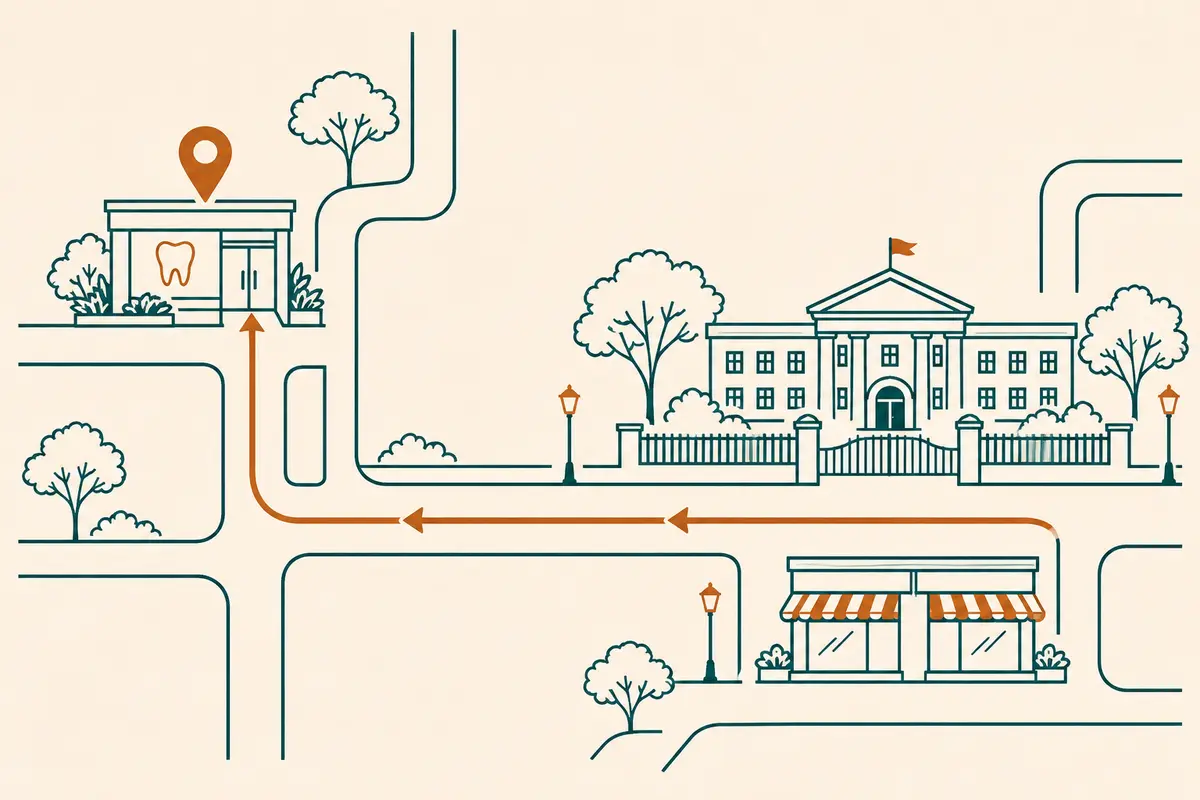
    Illustrated wayfinding sheet with a simple route line and landmark symbols
    Illustrative wayfinding artwork; not a measured map or photograph of the clinic.

    Clinic address to save

    Singh Cancer, Maxfac & Dental Center
    122/1-D, Baba Complex
    Panki-Kalyanpur Road, opposite Jawaharlal Nehru Inter College
    Kalyanpur, Kanpur, Uttar Pradesh 208017

    Copy or save the complete address before you travel. The nearby college is a useful landmark stated in the clinic’s supplied address. Treat it as a reference point, then follow the live map route and verify the exact building entrance with the clinic.

    Get directions without guessing

    Open the Google Maps directions link and check the destination shown before you begin. Add your starting point in Maps for route guidance. Conditions, route choices and estimated travel times can change, so check current navigation information close to departure.

    This article does not assume a particular bus, train, metro, parking facility or walking approach. The supplied information confirms the clinic address and map link, not specific transport services or on-site facilities. Choose a route that fits your needs and confirm practical details directly with the clinic.

    Call before travel: confirm the details that listings may miss

    Some directory details can differ or become outdated. A quick call can reduce avoidable uncertainty, especially if you need a particular entrance or step-free access. Ask the clinic to confirm:

    • That your appointment is scheduled and the clinic expects you at that time.
    • The exact entrance and floor within Baba Complex, and whether directions from the road would help.
    • Whether the route to the clinic involves stairs or a lift, and what access arrangements are available for your needs.
    • Whether parking is available or recommended; do not rely on an unconfirmed parking claim.
    • Current opening hours and any changes that affect your planned visit.
    • Whether you should bring a referral, previous records or other appointment information.

    If mobility, vision, hearing or other access considerations affect travel, explain what support would make the arrival easier and ask what the clinic can confirm. Do not assume building access based only on the address.

    Save the address and map before leaving

    Keep the full address in your phone notes, appointment message or another place you can access offline. Save the Google Maps destination before departure, check that it points to the correct clinic, and take the clinic phone number with you in case you need clarification on arrival. If someone is accompanying you, share both address and map link.

    Allow yourself time to check the final approach and read any directions safely before moving. If navigation takes you to a nearby entrance or the landmark rather than the clinic door, call for guidance instead of guessing which building access to use.

    What to expect before your visit

    The clinic offers dental and oral and maxillofacial care; the right appointment type depends on the reason for your visit. When you call, briefly explain whether you are seeking a routine dental appointment or asking about a specialist consultation. The clinic can help clarify booking arrangements. This does not confirm availability or a specific service time.

    Bring relevant existing records or referral details if you have them, and write down questions you want to ask. Do not arrange new tests just for the visit unless a clinician advises you. For appointment arrangements, use the clinic’s contact and appointments page.

    Direction link and arrival check

    The map destination link is supplied for this clinic: view directions to Singh Cancer, Maxfac & Dental Center on Google Maps. Verify the address displayed before following its route. For building-level guidance, access questions or current hours, call +91 79058 78797 before you set out.

    See the clinic’s Visit and Directions page for visit-planning information. Save the complete address, confirm entrance and access by phone, then use the map link to plan your route.

  • Oral Surgery Consultation Questions: What to Ask Your Oral and Maxillofacial Surgeon

    Oral Surgery Consultation Questions: What to Ask Your Oral and Maxillofacial Surgeon

    Patient visit planning · Kalyanpur, Kanpur

    Oral surgery consultation questions: what to ask your oral and maxillofacial surgeon

    A consultation is a chance to explain what brought you in, understand what an assessment may involve, and discuss possible next steps. A short list of questions—and relevant records—can help you leave with a clearer plan.

    Illustrated appointment notes with a jaw contour and pencil on warm ivory paper
    An illustrative preparation scene, not a photograph of the clinic or a patient.

    What is an oral and maxillofacial consultation for?

    An oral and maxillofacial consultation focuses on a question involving the mouth, jaws or related facial structures. The consultation helps the clinician hear your concerns, review relevant history and records, assess what may need closer examination, and explain whether further investigation or another type of care should be considered. The exact scope depends on your reason for attending and clinical assessment.

    It is not the same as deciding in advance that surgery is needed. A referral, scan or online description does not by itself settle what care is appropriate. Bring the referral wording if you have it, and ask the clinician to explain unfamiliar terms. For clinic information, see oral surgery.

    Before you go: gather useful context

    Write a few notes in your own words: what prompted the appointment, when you first noticed the concern, what has changed, and what you most want answered. This is a memory aid, not a diagnostic checklist. You do not need to identify a condition or decide which treatment is right.

    • Bring the referral letter and relevant dental or medical records you already have.
    • Bring prior imaging or reports if available; do not arrange new imaging unless a clinician advises it.
    • Make a current medicine list, including doses if known, and note allergies or past reactions.
    • Note relevant health conditions, previous procedures, or information that could affect assessment or care.
    • Write down your top questions. Bring a support person if you want help taking notes or remembering the conversation.

    Tell the clinician if you are unsure whether a record matters. Share sensitive information through appropriate clinic channels rather than an unverified messaging route.

    Questions about assessment

    Ask what the clinician needs to understand and why. The assessment may include discussion, examination or review of existing records; additional investigations are considered according to the clinical question. Not every person needs the same tests.

    • What information from my history is most relevant to this consultation?
    • What examination do you recommend, and what are you looking for?
    • Would imaging or another investigation help answer a specific question? What are its limits?
    • Can you explain what you have found so far, and what remains uncertain?
    • Do these findings need review by another clinician or service?

    If imaging is discussed, ask why it may be useful, what it could clarify, and whether existing images can answer the question. The American Dental Association encourages patients and clinicians to discuss recommendations, including the need for dental X-rays, as part of informed decisions. See its patient information on dental radiographs.

    Questions about options and alternatives

    If the clinician discusses a possible treatment, ask what problem it is intended to address and what options are relevant to your situation. Sometimes observation, further assessment, referral or more than one treatment approach may be discussed; no option should be assumed to fit everyone. Ask about the reasoning and limits in plain language.

    • What options are reasonable to consider, including no immediate procedure if appropriate?
    • What are the expected benefits, limitations and important risks of each option?
    • What could happen if I wait or choose a different option?
    • What would the proposed procedure involve, and what decisions would I need to make?
    • What costs are included in an estimate, and could additional investigations or visits cost extra?

    You can ask for time to think, a written summary, or clarification before deciding. The American Dental Association notes that patients should have an opportunity to ask questions about treatment options. A clear discussion supports informed decision-making; it does not require you to agree to a plan during the consultation.

    Questions about records and information

    Ask which records the clinician has reviewed and whether anything is missing. If you need to obtain records from another provider, ask what format is useful and how they should be sent. You may also ask whether you can receive a copy of the consultation summary or proposed plan for your own reference.

    For concerns involving an oral lesion, the consultation may have a different focus from a general oral surgery discussion. Review the clinic’s oral lesion screening information and ask what assessment is being considered in your specific case. A screening discussion cannot, on its own, establish a diagnosis.

    Close the visit with a next-step summary

    Before leaving, try a simple recap: “My understanding is that the next step is ____. Is that right?” Then ask:

    • What happens next, and who is arranging it?
    • Should I book a follow-up, and what question will that visit address?
    • Who should I contact if I need clarification about the plan, records or estimate?
    • Is there written information I can take away?

    Write down the agreed next step and the contact route. If new questions come up later, use the clinic’s confirmed contact channel rather than relying on assumptions about availability or response times.

    Take a question sheet with you

    Choose a few prompts from this article and put your highest-priority question first. For a printable appointment aid, use the Oral Lesion Consultation Question Sheet. To arrange or clarify an appointment, use the clinic’s contact and appointments page.

    Sources: American Dental Association, X-Rays/Radiographs; Types of Consent.

  • Prepare for a First Dental Visit in Kalyanpur: What to Bring and Ask

    Prepare for a First Dental Visit in Kalyanpur: What to Bring and Ask

    Patient visit planning · Kalyanpur, Kanpur

    Prepare for a first dental visit in Kalyanpur: what to bring and ask

    A little preparation can make a first conversation clearer. Bring a concise health and dental history, note what you want help with, and ask the clinic directly about appointment details, fees and access before setting out.

    An ivory appointment-planning sheet and pen with restrained linework
    An illustrative planning scene, not a photograph of the clinic.

    Before the appointment: check practical details

    When arranging a dental clinic visit, confirm the date and time, who you are scheduled to see, and whether the appointment is for routine dental care or a specialist consultation. Ask whether you need to arrive early, how long to allow, and what to do if you need to change the appointment. Do not assume opening hours or same-day availability from an old listing; confirm directly.

    Ask about the consultation fee and how any further examination or proposed treatment would be priced. It is reasonable to ask what the quoted amount covers, whether separate investigations may be recommended, and when you would receive an estimate for those. Ask which payment methods the clinic currently accepts rather than relying on online listings.

    Check the route and entrance details too. Singh Cancer, Maxfac & Dental Center is listed at 122/1-D, Baba Complex, Panki-Kalyanpur Road, opposite Jawaharlal Nehru Inter College, Kalyanpur, Kanpur, Uttar Pradesh 208017. Confirm the precise entrance, floor and any lift or steps before travel if those affect your visit. Ask about parking or other access needs directly.

    What to bring: a useful first dental appointment checklist

    • Any previous dental records, treatment summaries or relevant X-rays you already have. Do not arrange new imaging unless a clinician advises it.
    • A current list of medicines, including dose if known, and any allergies or past reactions you want the clinician to know about.
    • Relevant medical information, such as ongoing conditions, previous surgery or information about pregnancy, if applicable. Share what may affect care; ask if unsure what is relevant.
    • Details of previous dental treatment, including approximate dates, ongoing concerns and what has or has not helped.
    • Your appointment confirmation and a way to note answers. Bring glasses or hearing support you normally use.
    • A family member or support person if you want help remembering information or discussing decisions; check any visitor arrangements with the clinic.

    You do not need a polished medical record. A short written list is enough to prompt the conversation. Keep original documents with you and share copies only when useful. Avoid sending sensitive medical information through an unverified channel.

    Write questions down before you go

    Choose the questions that matter most to you and put the top two or three first. Consultations can cover a lot, and a written list helps you use the time on your priorities. Include what you hope to understand: the reason for a suggested examination, possible options, likely next steps or how to plan around work and caregiving.

    • What have you understood about my concern, and what else do you need to know?
    • What examination or tests might be relevant, and what would each help clarify?
    • What options are appropriate to discuss? What are the trade-offs, costs and steps for each?
    • Is there anything I should understand before deciding, and can I take time to consider a plan?
    • Who should I contact if I have a question after the appointment?

    Ask the clinician to explain unfamiliar terms in everyday language. You can repeat back your understanding and ask them to correct it. If you are not ready to decide, ask what information you need and whether a follow-up conversation is appropriate.

    Routine dentistry or specialist oral and maxillofacial consultation?

    A general dental appointment commonly starts with discussion of your dental history and an examination of your teeth and mouth, followed by a conversation about findings and possible next steps. The specific scope depends on your reason for attending and the clinician’s assessment. See the clinic’s general dentistry information for the service description, then confirm the right appointment type directly.

    An oral and maxillofacial consultation concerns the mouth, jaws and related facial structures, and may involve a more specific surgical or specialist question. It is not interchangeable with a routine check-up. Tell the clinic what the referral or concern is about and ask whether the appointment should be with a specialist. Review the clinic’s oral surgery information; a clinician determines what assessment or care is appropriate.

    Make space for clear decisions

    Before leaving, summarise what you heard: the main finding or question, any recommended next step, and whether you need to arrange another appointment. Ask for written instructions or an estimate when relevant. If a treatment is proposed, clarify what it involves, alternatives the clinician considers relevant, possible limitations, and what costs are included before agreeing.

    For a first dental visit, preparation is not about diagnosing yourself or knowing which treatment you need. It is about helping the clinician understand your history and giving yourself enough information to make decisions at your pace.

    Plan the visit with the clinic

    For an appointment, fee, timing or accessibility question, contact the clinic directly through its contact and appointments page. Check the visit and directions page for travel details, and confirm any access requirements with the clinic before you leave.

    Use this first dental visit checklist to jot down what to bring and ask.